Introduction
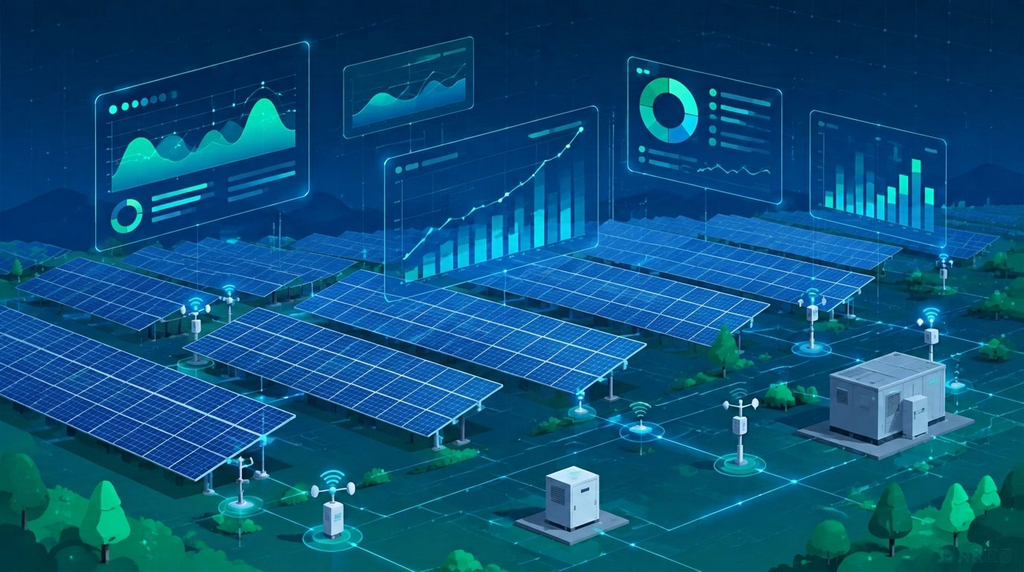
A modern utility-scale solar farm is more than a collection of modules, inverters, trackers, and cables. Increasingly, it is also a connected digital asset.
Solar plants generate large amounts of operational data every day, including irradiance, temperature, current, voltage, equipment status, and soiling levels. When this data is collected and analyzed effectively, operators can better understand plant performance, identify potential issues earlier, and make more informed operations and maintenance (O&M) decisions.
As solar projects are designed to operate for decades, maintaining and improving performance throughout their lifecycle is becoming increasingly important. This is where IoT, drones, AI, and data analytics are helping reshape solar operations.
IoT Monitoring: Making Solar Farms More Visible
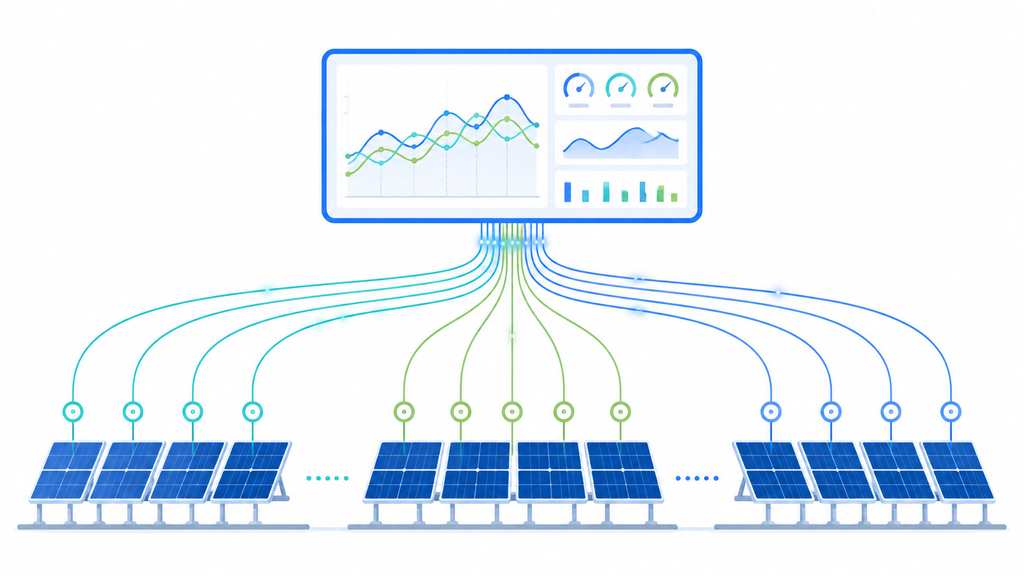
Traditional monitoring systems often provide only a high-level view of plant performance. Operators could see overall plant output and receive fault alarms, but pinpointing the source of an underperformance issue could still take days.
IoT-based monitoring provides a more detailed view of plant performance.
String-level monitoring shows how individual strings are performing, while weather stations provide information such as irradiance, temperature, and wind conditions. By combining these data sources, operators can compare actual output with expected performance and identify abnormal patterns more quickly.
For example, if one group of strings consistently performs below similar strings under the same conditions, operators can investigate possible causes such as soiling, equipment issues, or shading.
Think of IoT sensors as the solar farm’s nervous system; they constantly sense, report, and alert. IoT is therefore not simply about collecting more data. It is about turning data into useful operational insight and enabling faster, more targeted decisions.
Drone Inspection: Faster and More Frequent Diagnostics
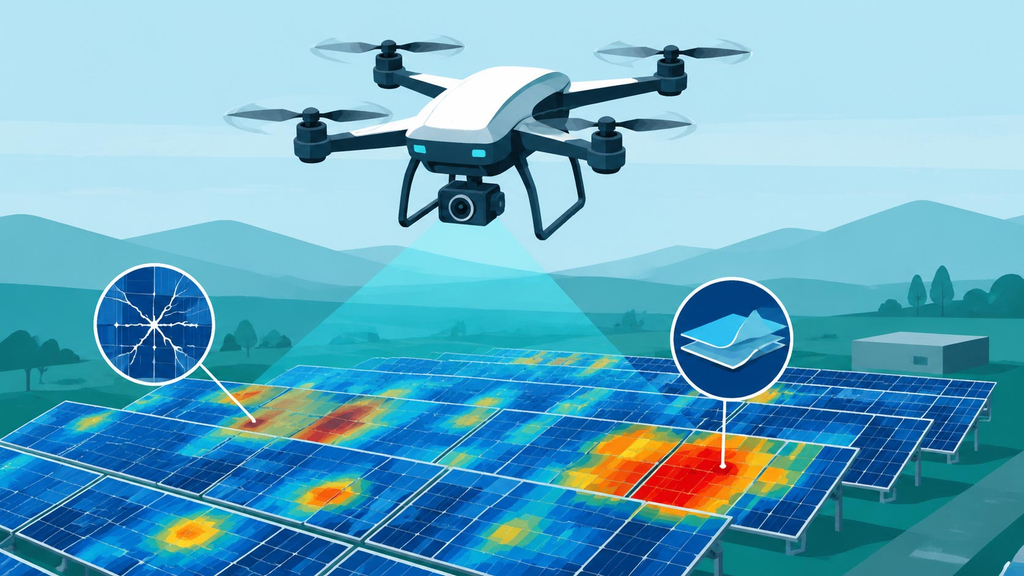
A utility-scale solar farm can span hundreds of hectares. Walking the site can take days, while drones can survey large areas in a fraction of the time.
Drones offer a more efficient approach. Equipped with thermal infrared and high-resolution RGB cameras, they can survey large areas and identify different types of anomalies. Thermal imaging can reveal unusual temperature patterns and potential hot spots, while RGB imaging can help detect visible issues such as cracked glass, delamination, and frame damage.
The biggest advantage may not simply be speed, but frequency.
Because drone inspections require fewer resources than large-scale manual surveys, they can be carried out more regularly or after events such as hailstorms and strong winds. Repeated inspections can also create a historical record, helping operators identify changes and developing issues over time. The real value of drones is not simply faster inspection, but the ability to detect problems earlier and monitor how site conditions change over time.
AI and Big Data: From Reactive to Predictive O&M
Traditional O&M often relies heavily on reactive maintenance. When something breaks, an alarm sounds and a technician is dispatched. AI offers a different path.
AI can help shift this process from reacting to problems to anticipating them. Imagine a string whose operating current gradually declines over several months. The change may be too small to trigger an alarm, but an AI model can compare the trend with historical operating data, weather conditions, soiling levels, and nearby strings.
AI can act as an early warning system, detecting subtle changes and patterns that might otherwise go unnoticed. At portfolio scale, AI and data analytics can help identify recurring equipment issues, optimize cleaning schedules, detect performance anomalies, and prioritize inspections and maintenance.
Digital Twins: Turning a Solar Farm into a Living Digital Model
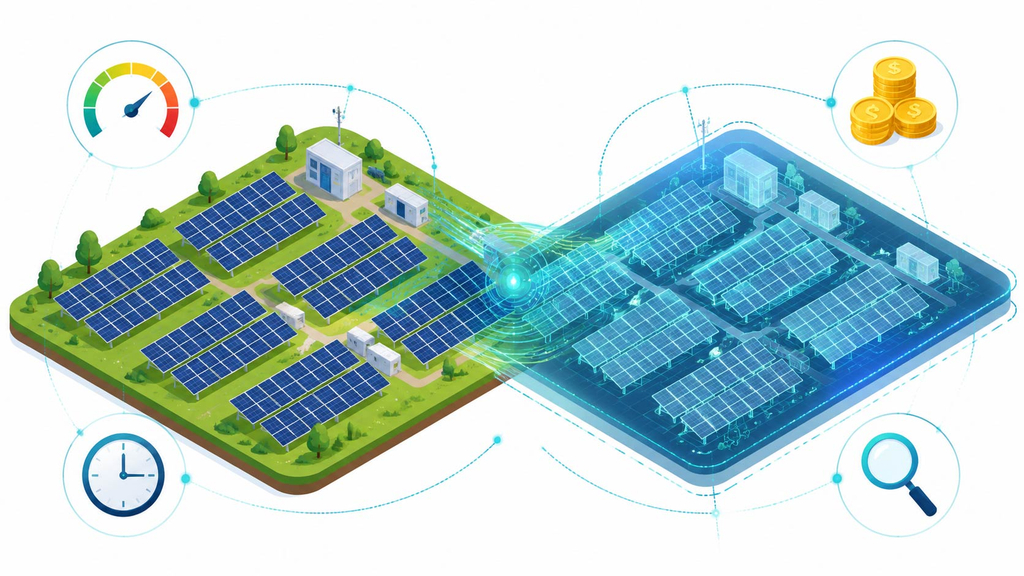
A digital twin is a virtual representation of a physical solar plant that is continuously informed by real-world operating data. Think of it as a digital counterpart of the plant: it brings together information from modules, inverters, weather stations, sensors, and other equipment to show how the physical asset is performing.
For example, if one section of a solar farm begins producing less energy than expected, the digital twin can help operators compare its performance with historical data and similar sections of the plant. This can help identify potential causes, evaluate maintenance options, and understand how a decision today could affect performance over time.
In this way, digital twins connect daily monitoring with longer-term asset management. They are not simply another dashboard; they provide a more integrated view of how a solar asset is performing, changing, and responding to different operating conditions.
Reliable Hardware Remains the Foundation
Digital tools can improve how a solar farm is monitored and managed, but they cannot replace reliable hardware.
Modules and other core equipment must continue to perform reliably under changing temperatures, weather conditions, and operating environments. Consistent manufacturing quality and predictable long-term performance provide the foundation for effective digital O&M.
For module manufacturers, this also means designing products with long-term digital monitoring and asset management in mind. Consistent module performance, traceable manufacturing quality, and reliable operating data can give project owners a stronger foundation for identifying changes and managing assets over time. Astronergy continues to integrate intelligent manufacturing and quality management across its global production network, supporting the long-term reliability that digital O&M depends on.
This is why the future of solar is not a choice between hardware and software. It depends on bringing the two together.
In simple terms, the connected solar lifecycle links smart manufacturing and reliable modules with connected monitoring, intelligent O&M, and long-term asset optimization.
Conclusion
The solar farm of the future may look similar from the outside, but its operations will be increasingly intelligent and connected. IoT, drones, AI, and other digital tools can help operators identify problems earlier, optimize O&M, and improve performance throughout the asset lifecycle.
Ultimately, the digital solar farm is not about collecting more data. It is about turning data into better decisions—and creating greater value from every solar asset throughout its operating life.