

Germany has long been regarded as one of the world's most mature solar markets. With more than 100 GW of installed solar capacity and one of Europe's highest levels of distributed solar adoption, the country is now entering a new phase of its energy transition—one in which integrating renewable energy efficiently is becoming just as important as deploying it.
Today, Germany's electricity system is increasingly accommodating two-way power flows from rooftop solar, while growing numbers of electric vehicles, heat pumps, battery storage systems, and other distributed energy resources are reshaping both electricity generation and consumption. Much of the existing grid infrastructure, however, was originally designed for a far more centralized power system.
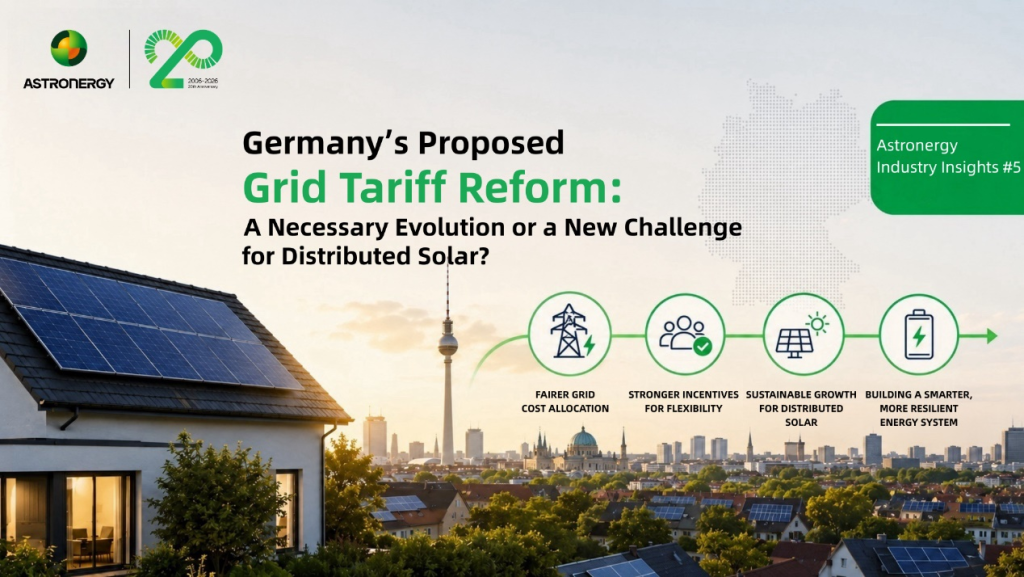
Against this backdrop, Germany's Federal Network Agency (Bundesnetzagentur, BNetzA) has launched a consultation on reforms to the country's electricity network charging system. The proposal aims to establish a fairer and more efficient framework for financing the grid while supporting the transition toward a more flexible electricity system.
The consultation has also sparked extensive debate across the solar industry, reflecting a broader challenge facing many mature renewable energy markets: how to modernize grid economics without weakening investment incentives for clean energy.
Why Germany Wants to Reform Grid Charges
Electricity grids are the backbone of the energy transition. Regardless of how electricity is generated, reliable transmission and distribution infrastructure remains essential for maintaining system stability and delivering power to consumers.
Germany's existing network charging framework was largely designed for a centralized electricity system with predictable power flows. Today's electricity system looks very different. Millions of rooftop solar systems, together with electrified heating, transport, and distributed storage, are reshaping both electricity generation and consumption, while rising grid congestion and expanding network investment needs are increasing costs for operators.
At the same time, as more consumers generate part of their own electricity, they purchase less power from the grid while continuing to rely on it for backup supply and electricity exports. This has raised important questions about how the costs of maintaining the electricity network should be shared fairly among all users.
According to BNetzA, the current charging system no longer fully reflects how the grid is used. The consultation therefore explores measures to:
- Improve the allocation of grid costs among users.
- Encourage more flexible electricity consumption.
- Reduce congestion management costs.
- Better integrate distributed renewable energy.
- Help contain future network expansion costs.
- Strengthen the long-term sustainability of grid financing.
Rather than simply increasing charges, the proposal seeks to adapt the network charging framework to the realities of a renewable-powered electricity system.
Impact on Residential Solar Economics
Among the various proposals under discussion, one of the most debated concerns is its potential impact on residential solar self-consumption.
Germany's solar industry association, Bundesverband Solarwirtschaft (BSW), has warned that higher fixed network charges could reduce the economic benefits of operating rooftop photovoltaic systems. According to estimates cited by the association, some prosumers could face additional annual costs of up to €150 if certain options are implemented.
BNetzA, however, argues that the objective is not to discourage rooftop solar but to ensure that fixed network costs are recovered more equitably as electricity consumption patterns evolve.
Because fixed grid charges are paid regardless of how much electricity households purchase from the grid, higher fixed fees reduce the financial savings achieved through self-consumption. As feed-in tariffs have gradually declined over the years, maximizing self-consumption has become increasingly important to the economics of residential solar investments.
Industry representatives therefore argue that any reduction in these financial benefits could weaken incentives for future rooftop PV deployment.
Generators May Also Share Network Costs
Another notable element of the consultation is the proposal for electricity generators to contribute to ongoing grid financing through a capacity-based network charge of approximately €4–€7 per kilowatt annually.
Historically, generators have generally not contributed to ongoing grid-use charges in the same way as electricity consumers. The current proposal also includes transitional arrangements under which many existing installations would remain exempt for up to 20 years from their commissioning date, limiting immediate impacts on operational assets.
For renewable energy developers, the proposal introduces another consideration in long-term project planning. More broadly, it reflects a growing international discussion about how grid costs should be shared as electricity systems become increasingly decentralized.
Greater Emphasis on Demand-Side Flexibility
The consultation also proposes greater use of capacity-based pricing for larger electricity consumers, encouraging businesses to manage demand more actively and make better use of available grid capacity.
This reflects a broader structural shift taking place across many renewable-powered electricity systems. Future grids will depend not only on flexible generation but also on demand-side flexibility, supported by technologies such as battery storage, smart charging infrastructure, and intelligent energy management.
What This Means for the Solar Industry
The current debate should not be interpreted as a sign that Germany is stepping back from solar energy. Instead, it reflects the next stage of the country's energy transition, where policies must evolve from accelerating renewable deployment to managing an electricity system increasingly powered by renewable energy.
For the solar industry, this creates both challenges and opportunities. Higher fixed network charges could affect the economics of traditional self-consumption models. At the same time, the consultation highlights the growing importance of flexibility and grid-supportive behavior. Residential battery storage, smart energy management, and demand-side flexibility can increase self-consumption, shift electricity use to periods of lower grid stress, reduce peak demand, and improve overall network efficiency.
Although PV modules remain the foundation of every solar system, their value will increasingly depend on how effectively they operate within integrated energy solutions that combine generation, storage, and intelligent energy management. This is likely to accelerate demand for complementary technologies such as battery storage, smart energy management systems, vehicle-to-grid integration, dynamic electricity pricing, and virtual power plants, all of which help optimize how distributed solar interacts with the electricity network.
Future competitiveness will increasingly depend not only on generating clean electricity, but also on integrating solar into a smarter and more flexible energy system.
Looking Ahead
Germany's proposed reform reflects a broader structural shift taking place across mature renewable energy markets. As solar penetration continues to grow, the industry's focus is expanding beyond installing more capacity to building a more flexible and resilient electricity system.
While the final outcome of the consultation remains to be seen, one trend is already becoming clear: customers will increasingly look for solar solutions that deliver not only high energy yields, but also stronger long-term value under evolving market and policy conditions.
Through continued product innovation and close collaboration with partners worldwide, Astronergy aims to support customers as electricity markets become increasingly flexible while contributing to the sustainable growth of distributed solar in Germany and beyond.