

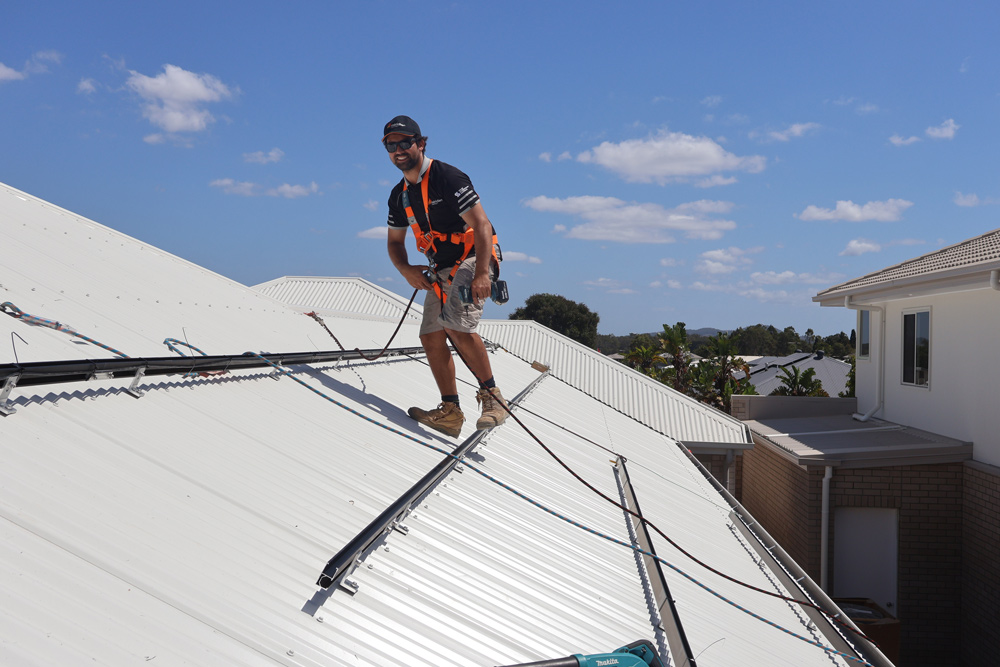
In Ormeau, on Queensland’s Gold Coast, a Specialist Disability Accommodation (SDA) home now generates more electricity than it uses. Completed in 2025, the project paired 18 solar panels with a battery system designed to enhance energy resilience for residents who rely on electrically powered support equipment in their daily lives.
The numbers tell one story: 7.92 kW of generation capacity, 29.4 kWh of storage, and annual output exceeding 12,000 kWh — enough to eliminate electricity bills while keeping critical circuits live during outages.
As a global Tier 1 module manufacturer, Astronergy sees projects like Ormeau as more than individual installations. They are early signals of how distributed solar is evolving — from a pure focus on cost reduction toward energy systems designed around the people who depend on them most.
Why Backup Power Matters Here
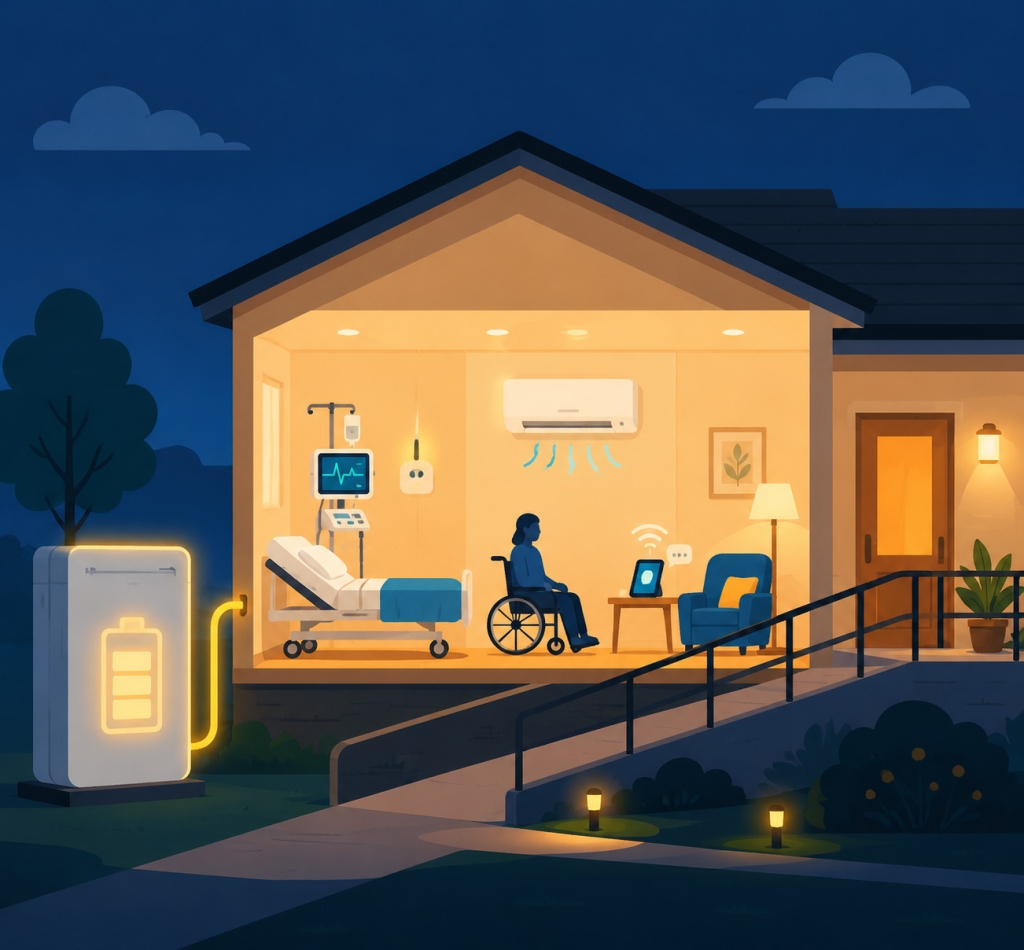
A standard grid-tied solar system reduces daytime electricity purchases, but it does not provide power during a blackout. Although conventional grid-connected solar systems can significantly reduce electricity costs, they typically cannot provide backup power during a grid outage. Most grid-tied inverters are designed to shut down automatically as a safety measure — a function commonly known as anti-islanding protection. While this protects utility workers and the broader electricity network, it also means that solar panels alone cannot keep a home powered when the grid goes offline.
For most households, this is an inconvenience. For residents of an SDA High Physical Support (HPS) property, the stakes are different. Air conditioning, ceiling hoists, powered beds, and communication devices must remain operational. A prolonged outage is not just disruptive — it can compromise the support systems that make independent living possible.
That distinction shaped the entire system design. This was not a solar installation with a battery added for optional backup. It was a backup power system that happens to be solar-powered.
How the System Was Designed
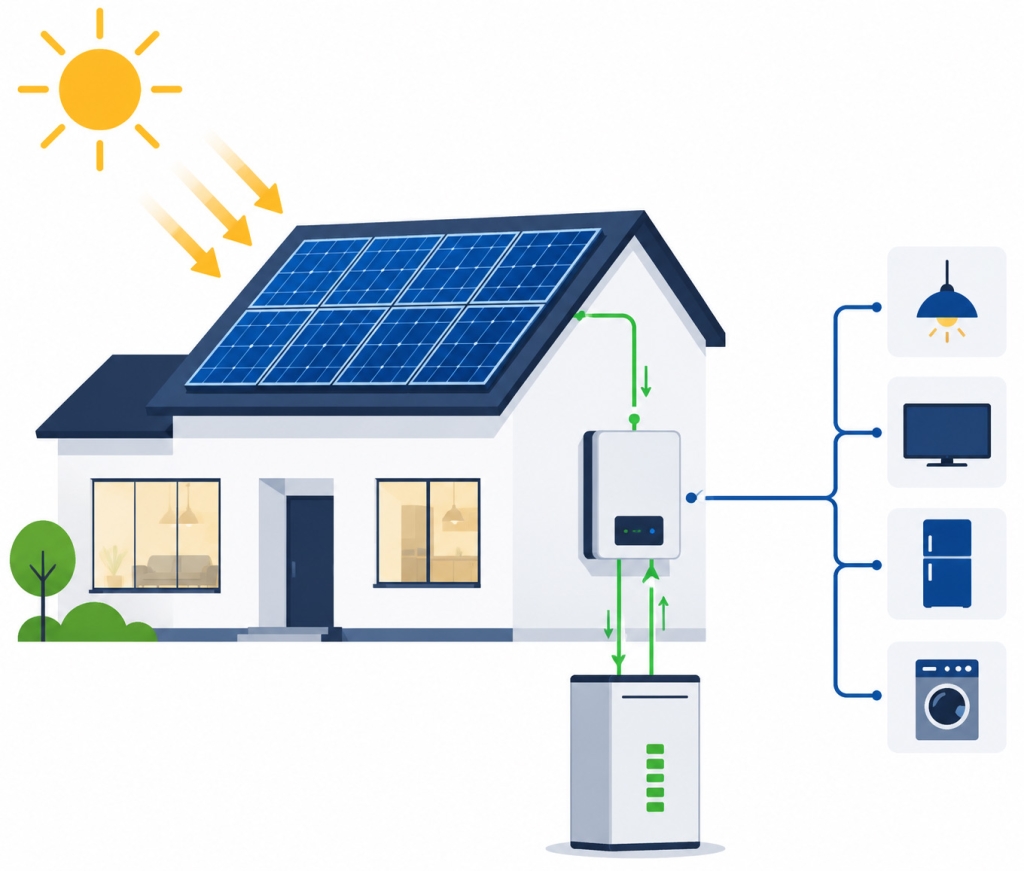
Meridien Energy, the installer, began with an Energy Management Plan specific to this property — a home with three HPS bathrooms, reverse-cycle air conditioning, a multi-purpose room, and 24/7 occupancy. The plan mapped both current and projected energy use before any equipment was specified.
The solar array uses 18 Astronergy N7s bifacial modules built on n-type TOPCon cell technology. This architecture typically delivers higher efficiency per square meter than conventional p-type panels — a practical advantage on residential rooftops where installation area is limited. The bifacial design captures reflected light on the rear side, contributing a modest but measurable energy gain over the system’s operating life.
On the storage side, a 29.4 kWh Solax battery integrated with a hybrid inverter was sized to sustain critical loads through extended outages. During normal operation, the battery also enables load shifting — charging from solar during the day and discharging during peak-rate evening hours.
What the Numbers Mean
Annual generation exceeds 12,000 kWh. By comparison, the average Queensland household consumes roughly 5,500 to 6,000 kWh per year. Even accounting for the higher energy demand of an SDA HPS property — continuous climate control, assistive equipment, 24-hour occupancy — the Ormeau system covers the full load with surplus.
On the financial side, producing more electricity than the home consumes effectively eliminates ongoing electricity bills — saving thousands of dollars annually. For NDIS participants on fixed incomes, that means budget predictability and insulation from retail price increases, a recurring concern in Australia’s electricity market.
Equally important: when the grid fails, the battery takes over without interruption. Southeast Queensland’s exposure to severe weather is well documented. In this configuration, solar is not simply a savings mechanism — it is a safety asset.
Lessons Beyond a Single Project
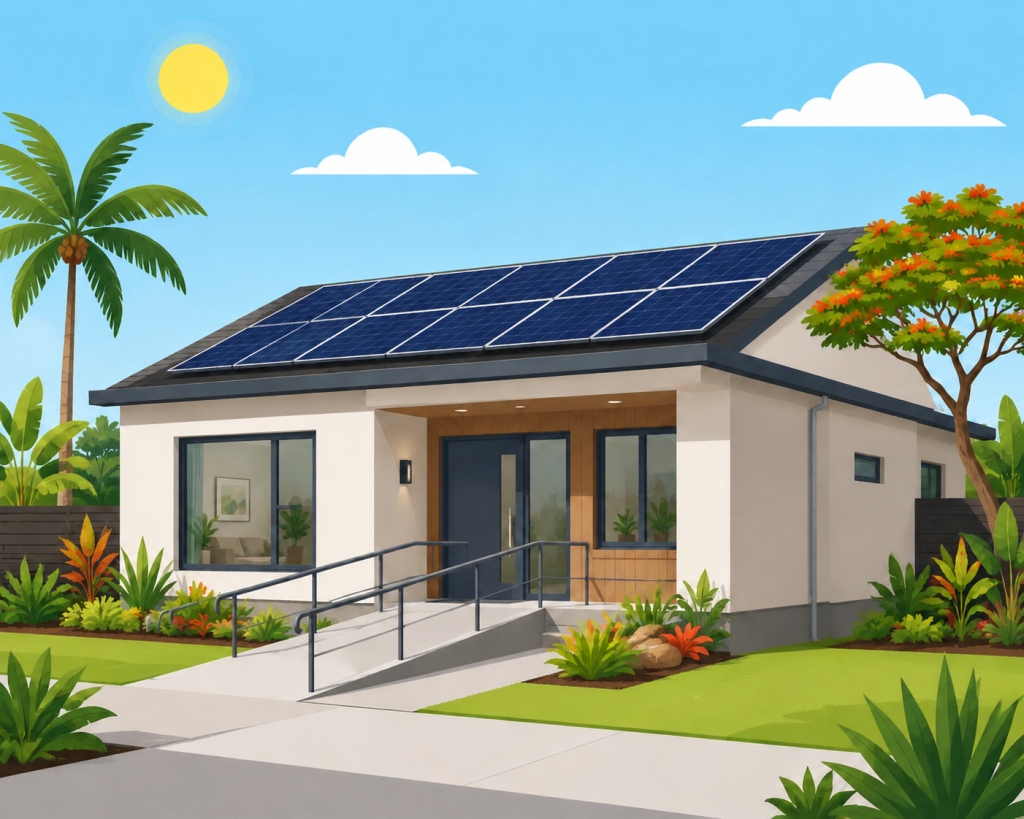
Ormeau is a single installation, but its design logic applies broadly. Across Australia, demand for SDA places continues to grow. Each new development represents an opportunity to treat energy resilience as a core design requirement rather than an optional add-on.
For module manufacturers, this shift sharpens a familiar question: what does “reliability” mean when the end user cannot afford a power failure? The answer is not found in a single specification. It lives in consistent field performance under real operating conditions — high temperatures, humidity, daily thermal cycling. It means products that installers and developers can specify with confidence for applications where backup power is not a feature but a requirement.
The Bottom Line
Eighteen panels on a roof in Ormeau. A robust energy storage system. More than 12,000 kilowatt-hours a year. The numbers are straightforward. What they enable — a home where disability does not mean dependence on the grid — is anything but ordinary.
Astronergy’s N7s series delivers exceptional reliability through its compact footprint, high efficiency, and a 30-year linear power warranty. For developers and EPCs (Engineering, Procurement, and Construction) working on community housing, SDA, and residential projects, that combination of performance and long-term durability is where the conversation about value begins.
→ Explore the ASTRO N series for distributed solar applications