

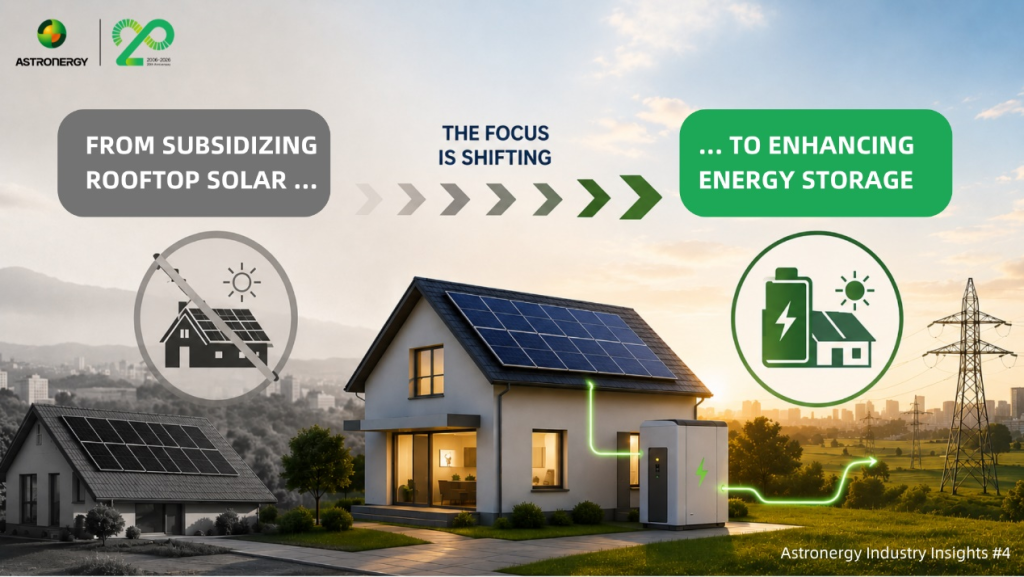
Romania’s energy policy in 2026 is signaling a subtle but significant shift: the focus of public incentives is moving away from expanding rooftop solar installations toward enhancing energy storage capabilities. While the Casa Verde photovoltaic grant program, which historically offered homeowners up to 90% of system costs, will not run this year, the government is redirecting support toward battery storage for existing solar prosumers. This shift has important implications for both market growth and the strategic positioning of PV solution providers.
Market Context and Policy Trends
Since its inception in 2018, the Casa Verde program has been instrumental in catalyzing Romania’s residential solar market, helping achieve over 3.7 GW of installed capacity among prosumers in under four years. Despite the temporary suspension of solar-specific grants, the rooftop PV market is showing remarkable resilience. Romanian Energy Regulatory Authority (ANRE) data indicates continuous growth, with cumulative solar capacity surpassing 7 GW and new installations in 2025 reaching a record 2.2 GW.
Looking forward, the government’s €76 million allocation for hybridization through storage systems reflects a policy pivot toward system flexibility, resilience, and self-consumption. As Irene Mihai of the Romanian Photovoltaic Industry Association points out, this evolution signals a maturing market where storage is no longer a marginal add-on but a central component of an efficient rooftop PV system.[1]
Opportunities for Stakeholders
- Rising Demand for Integrated PV + Storage Solutions
The 250,000+ prosumers in Romania represent an established customer base for battery storage solutions. For PV suppliers, this creates an opportunity to offer integrated systems combining high-efficiency modules with storage, unlocking value beyond initial energy generation.
- Strengthened Self-Consumption and Grid Flexibility
As Romania continues to prioritize self-consumption, prosumers are increasingly seeking solutions that reduce dependency on grid infrastructure. This trend may accelerate investments in bifacial or high-efficiency modules, energy management systems, and hybrid inverters, all of which can enhance system efficiency and ROI.
Challenges to Consider
- Slower New Solar Capacity Deployment
The temporary absence of solar installation grants may slightly dampen new household solar adoption. While rooftop growth remains strong, the pace may slow compared to the peak years of Casa Verde, requiring careful market strategy and proactive engagement with existing prosumers.
- Regulatory Uncertainty
Implementation details for the battery storage grant program are not yet finalized. Eligibility criteria, funding mechanisms, and technical requirements could influence the uptake rate and affect sales forecasts for storage-integrated PV systems.
- Price Volatility Risk
If geopolitical tensions ease or natural gas supply recovers, electricity prices could decline significantly. As current high electricity prices are not considered the norm, there is a strong risk of price correction, which could directly weaken the ROI model for residential solar investments and lead consumers to delay or cancel purchasing decisions.
Key Takeaways for 2026
- The Romanian rooftop PV market remains robust, growing by approximately 1 GW per year despite changing incentives.
- Battery storage is becoming central to market strategy, offering a platform for product innovation and hybrid system adoption.
- For PV manufacturers and suppliers, the shift underscores the importance of high-performance, adaptable modules and holistic solutions that combine generation, storage, and energy management.
- Maintaining a local-market perspective and engaging directly with prosumers can amplify brand authority and capture new opportunities in a maturing market.
As Romania transitions toward storage-supported prosumers, it is crucial for PV solution providers to emphasize system efficiency, integration flexibility, and the long-term value of high-performance modules. By aligning offerings with both market trends and policy directions, companies can sustain momentum in one of Eastern Europe’s fastest-growing solar markets.
Backed by CHINT Group’s integrated capabilities across the entire renewable energy value chain, spanning silicon materials, wafers, cells, modules, inverters, energy storage systems upstream, to project development, EPC, and long-term operations downstream, Astronergy is well positioned to respond to the market’s increasing demand for integrated PV + storage solutions.
Featuring high efficiency, strong reliability, high bifaciality, and optimized energy yield, ASTRO N series modules continue to support customers in maximizing long-term system value. At the same time, Astronergy actively strengthens its localized market engagement across Europe through close collaboration with local partners and installers, enabling the company to better capture emerging opportunities while navigating regulatory and market uncertainties.