


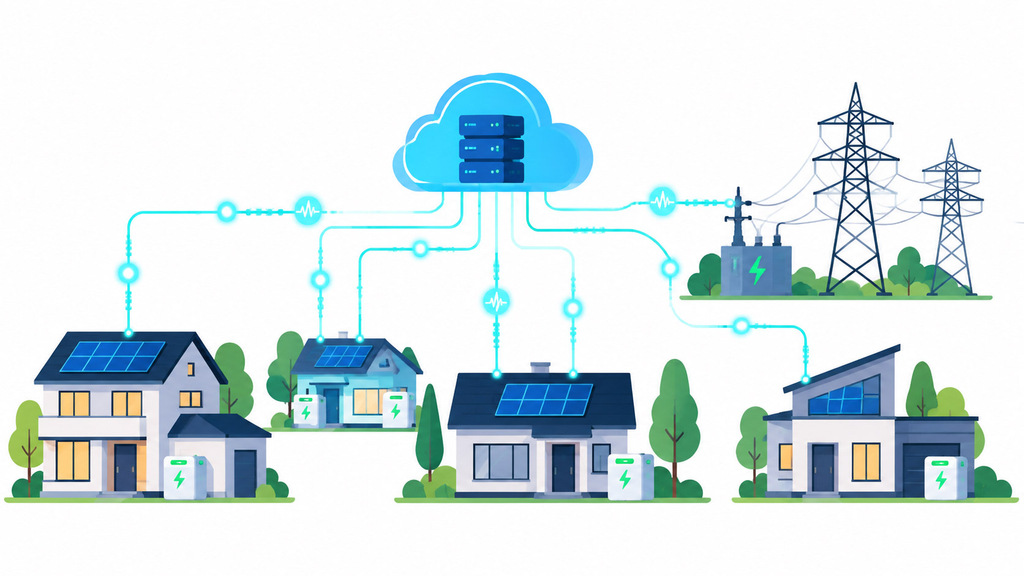
If you have rooftop solar, you know the equation: generate during the day, use what you can, send the rest to the grid. Add a home battery, and you can store excess energy for the evening, potentially reducing your reliance on grid electricity.
But a battery can do more than wait for sunset. Through a virtual power plant (VPP), it can also support the grid during periods of high demand and, in some markets, earn additional value for its owner. This is not a future concept; it is already happening at scale.
What Is a Virtual Power Plant?
A traditional power plant generates electricity from a single, centralized facility. A virtual power plant (VPP) flips this model: instead of one large plant, it connects thousands of distributed energy resources — rooftop solar, home batteries, EV chargers, smart appliances — and uses software to coordinate them into a single, flexible resource that can support the grid when needed.
In short: one battery serves one home. Connect thousands through a VPP, and they become a virtual power plant that can dispatch energy or provide grid services at scale.
How Distributed Solar and Storage Join the Grid
VPP participation typically requires a compatible home battery or other controllable energy device, together with the communications and control systems required by the program. When paired with rooftop solar, battery storage can capture excess daytime generation and make more energy available for flexible use when the grid needs it.
A VPP operator manages the network. When the grid needs support, the operator coordinates participating batteries to charge, discharge, or adjust their power output. If a dispatch window overlaps with your evening demand peak, you may have less stored energy available for your household, depending on the program’s reserve requirements.
How VPPs Can Create Value for Homeowners
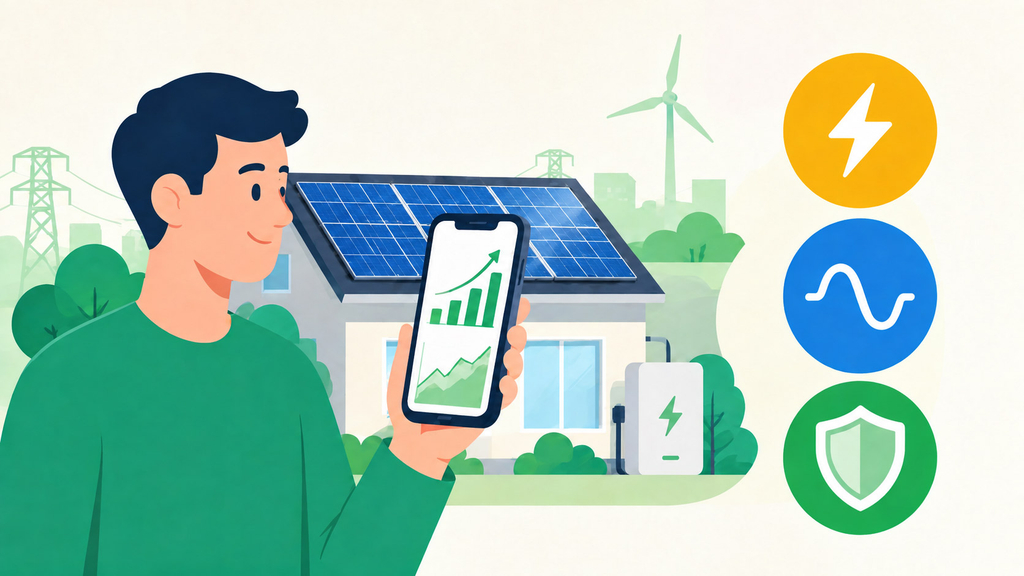
VPP programs can create value in several ways, depending on the local electricity market.
Demand Response
When electricity demand is high, a VPP can reduce pressure on the grid by discharging participating batteries or adjusting other flexible devices. Depending on the program, participants may receive compensation for making this flexibility available.
Frequency Regulation and Ancillary Services
Grid frequency must remain close to its nominal value (50 Hz or 60 Hz, depending on the region). When supply and demand suddenly fall out of balance, batteries can respond very quickly to help stabilize grid frequency. Depending on the market and program structure, participants may receive payments for making battery capacity available, even when the battery is not frequently dispatched. However, payments for ancillary services can vary significantly, so this income is not guaranteed.
Energy Arbitrage
A battery can store electricity when prices are low and discharge when prices are high. Through a VPP, charging and discharging can be optimized across thousands of homes to capture price differences in electricity markets.
VPP Programs Already Running Today
Virtual power plants are not a future concept. They are operating at scale:
· In California, Sunrun reported in July 2026 that its distributed power plant had more than 80,000 participating households representing more than 110,000 home batteries, with up to 425 MW of peak dispatchable capacity.
· In Australia, AEMO reported that renewable generation reached 46.5% of NEM generation in Q1 2026, while battery energy shifting from daytime to evening more than tripled. Together, these trends highlight the growing role of storage in balancing the grid.
· In Texas, El Paso Electric and Base Power launched a residential battery pilot in 2026. The networked batteries are designed to be dispatched during periods of high demand while preserving backup power for participating homes.
VPP programs vary by market, and earnings are not guaranteed. Before enrolling, homeowners should check compensation, battery reserve requirements, contract terms, and any impact on existing electricity or feed-in tariff arrangements.
Conclusion
Virtual power plants are redefining what home solar and battery systems can do. A battery is no longer just backup or load-shifting for a single household—it can become a flexible grid resource when coordinated with thousands of others. For homeowners, this means solar and storage can create value beyond bill savings: through demand response, ancillary services, or energy arbitrage, depending on the local market.
As solar, batteries, EVs, and smart devices continue to connect to the grid, that flexibility will only grow in importance. With the right program and realistic expectations, homeowners should compare program terms, reserve requirements, and compensation structures. With the right VPP, a home energy system becomes more than a way to lower bills—it becomes an active part of a more resilient, decentralized energy system.
Underlying this transition, high-quality solar modules remain an important foundation for generating the clean electricity that powers these increasingly connected energy systems.