


The global solar procurement landscape is evolving. In 2026, conversion efficiency and cost per watt remain important — but increasing attention is being placed on a more fundamental question: where a module comes from, and whether its origin can be reliably verified.
The market is gradually shifting from relying on supplier declarations to requiring clearer, verifiable evidence. Supply chain transparency is no longer seen as a value-added feature, but is becoming an important consideration for market access in many regions.
The Regulatory Shift: How Unclear Origin Threatens Project Viability and ROI
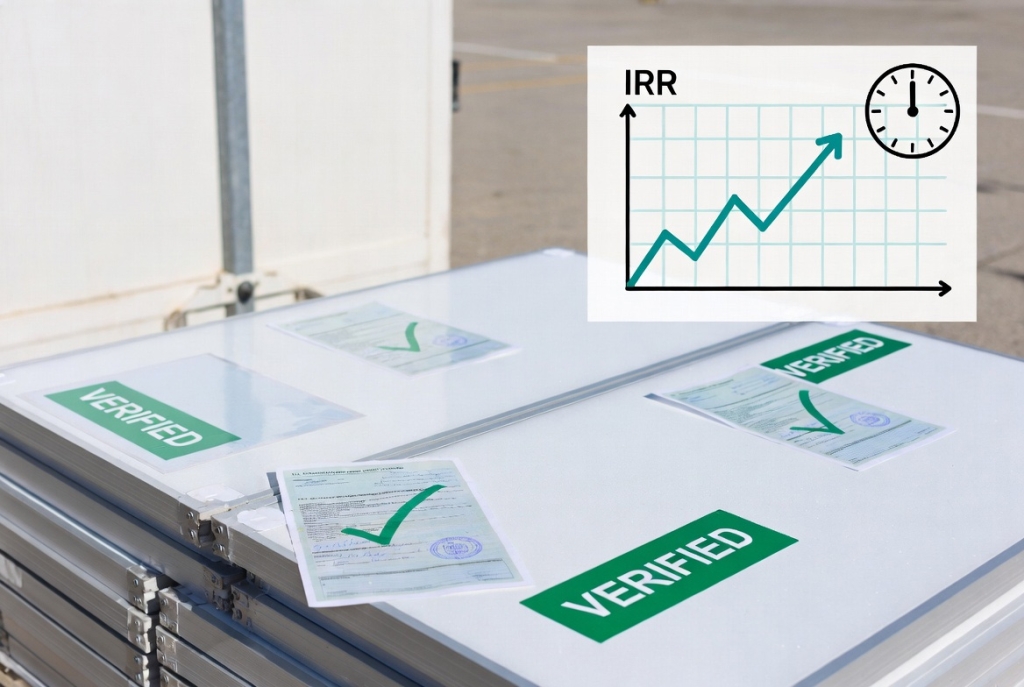
While 2024 and 2025 were about policy formation, 2026 is the year of evidence-based enforcement.
Driven by new overlapping policies — such as the EU Corporate Sustainability Due Diligence Directive (CSDDD), the EU Forced Labour Regulation, and global pushes for precise Product Carbon Footprint (PCF) data — customs authorities, regulators, and lenders are no longer looking just at the finished module. Their scrutiny now extends deep upstream into cells, wafers, ingots, and polysilicon.
Many buyers still tend to view supply chain opacity as a narrow “compliance issue.” In reality, a panel with an unclear origin is a commercial ticking time bomb that can trigger a disastrous chain reaction:
Financing Failures
Banks, infrastructure funds, and institutional investors now weigh ESG controls heavily. Modules lacking clear provenance face prolonged due diligence, reduced lender confidence, and exclusion from green capital, severely damaging project bankability.
Customs Delays & EPC Disruption
Customs authorities now demand batch-level, transaction-specific traceability. If a supplier cannot produce upstream sourcing records within the required timeframe, shipments will be seized or held.
Eroded IRR (Internal Rate of Return)
A single week of port delays means compounding warehousing costs, idle EPC labor, equipment rental fees, and potentially missing your Commercial Operation Date (COD). For a 50 MW project, these delays can easily escalate into six-figure losses.
The Bottom Line: In 2026, the most expensive solar module is not the one with the highest upfront price. It is the one that gets stuck at the port and delays your financing because its origin cannot be verified.
The Buyer’s Playbook: How to Mitigate Risk with Verifiable Traceability

To protect your investments and your timeline, procurement teams must stop relying on vague supplier assurances or basic certificates of origin. You need hard, traceable evidence.
Three Critical Questions to Ask Your Supplier
1. Do you maintain a traceability system from polysilicon to module?
A system that cannot link upstream material sources to specific production batches is just a marketing claim, not a traceability system.
2. Are your supply chain due diligence practices publicly transparent?
Verbal assurances are no longer enough. Real compliance requires open access. Look for publicly disclosed supply chain management policies, a web-based traceability tool on the supplier’s website for querying silicon-based material origin, accessible via unique verification codes.
3. Can you provide complete, verifiable documentation quickly?
Customs won’t wait. Does the supplier have a dedicated team capable of retrieving batch-linked documents under tight deadlines?
Demand “Hard” Evidence
Always request these core documents before making a procurement decision:
- 1. Life Cycle Assessment (LCA) and Product Carbon Footprint (PCF) records
- 2. Batch-level silicon-based material BOM (Bill of Materials) traceability records
- 3. Comprehensive country-of-origin and chain-of-custody documentation
Lock It Into Your Contract
Your purchase agreement is your last line of defense. Do not leave transparency expectations to sales calls. Draft clauses alongside your legal team that explicitly define:
- 1. Traceability disclosure obligations
- 2. Strict deadlines for document submission
- 3. Financial liability and indemnity for missing evidence or customs delays
Astronergy: Your Professional, Responsible, and Reliable Partner
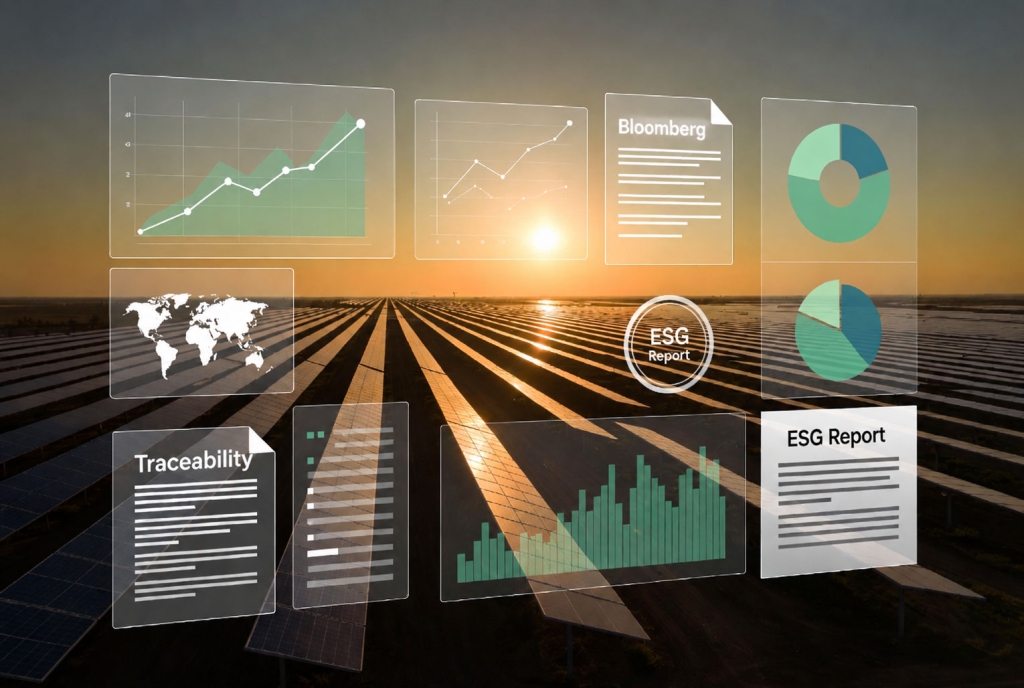
In an industry where every watt counts, the projects that truly succeed are built on clarity — not just efficiency.
At Astronergy, compliance transparency is not a marketing add-on; it is a core manufacturing capability. As a BloombergNEF Tier 1 manufacturer with 170+ GW shipped globally, and a Kiwa PVEL “TOP Performer” for nine consecutive years, we understand the commercial reality of modern solar deployment.
We have built robust, digital traceability processes across every stage of our supply chain — from polysilicon sourcing through to final module dispatch. In addition to securing top-tier product certifications from recognized institutions like TÜV NORD, Kiwa PVEL, and RETC, we ensure that our batch-linked silicon-based material BOM records, chain-of-custody documentation, and carbon footprint data can be promptly made available for review.
With Astronergy, EPCs and developers have open access to the batch-specific data they need to clear customs and satisfy lenders without friction. We believe transparency is not a constraint — it is what makes your solar assets truly bankable.