

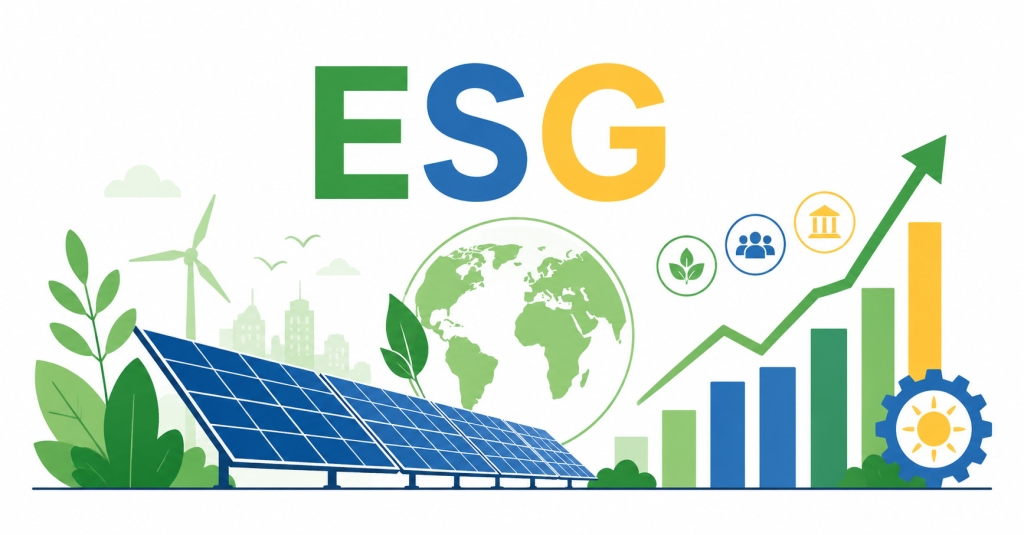
In October 2023, the EU’s Carbon Border Adjustment Mechanism (CBAM) entered its transitional phase. Beginning in 2026, the mechanism will move into its financial implementation stage, further strengthening the link between carbon emissions and international trade. Aluminum, one of the materials commonly used in PV module frames, is already covered by CBAM, while the potential inclusion of additional PV-related products continues to be discussed across the industry.
For the solar sector, this reflects a broader trend: sustainability considerations are increasingly influencing procurement, investment, and supply-chain decisions. ESG is no longer solely a reporting topic—it is becoming an important factor in how projects are evaluated and suppliers are selected.
What ESG Means for PV Manufacturers
Carbon footprint is now a product specification
France’s PPE2 framework already makes carbon footprint a mandatory criterion for public tenders, setting a benchmark that global markets are following. Forward-thinking manufacturers are already delivering on advancing low-carbon production accordingly. For instance, Astronergy has achieved a certified carbon footprint of 350 kgCO₂e/kWc for its modules (2025 Sustainability Report). Manufacturing decisions — thinner silicon wafers, fluorine-free backsheets, lead-free soldering strips — no longer sit in the R&D lab. They sit on the balance sheet as export pricing power.
Zero-carbon factories are tangible production assets
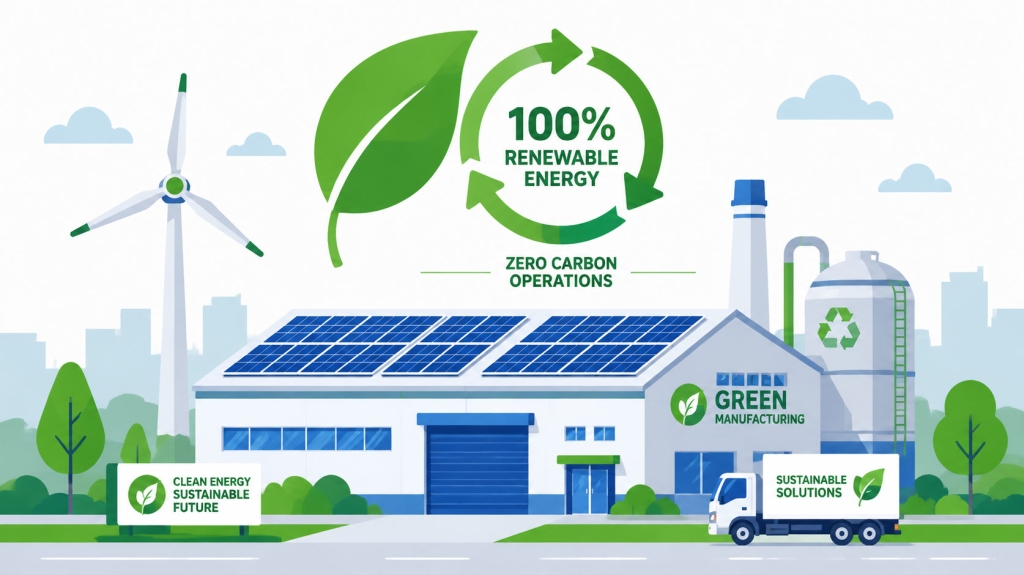
With 12 intelligent manufacturing bases worldwide, Astronergy continues to advance low-carbon manufacturing across its global operations. Among them, the Yancheng Manufacturing Base (Phase I) and Jiuquan Manufacturing Base have been certified by TÜV Rheinland as Zero-Carbon Factories. These serve as a reference model for the Company’s overall low-carbon and green transformation in production and operations. As sustainability requirements continue to evolve, such independently verified achievements help demonstrate the Company’s commitment to transparent and responsible manufacturing practices.
Supply chain labor compliance is auditable
Global supply chain due diligence laws — such as Germany’s Supply Chain Act (LkSG) and the EU’s CSDDD — are expanding rapidly. Under these frameworks, an independent audit trail is the difference between a secured contract and market exclusion. Astronergy scored 85/100 for Labor & Human Rights under its EcoVadis assessment (2025 Sustainability Report), backed by a zero-incident record on forced labor and discrimination. Beyond compliance, community investments — Yunnan Nujiang education (RMB 500,000), Vietnam Tac School “PV + Education” (90+ beneficiaries), and the Homing employee exchange program — demonstrate long-term social capital.
Governance structure separates signal from noise
In 2023, Astronergy established a Board-level Strategy & Sustainability Committee alongside an independent sustainability department. With the Chief Sustainability Officer (CSO) serving at the director level, ESG metrics are reviewed directly by the Board to guide long-term strategic positioning. Governance is often the clearest indicator of whether ESG commitments are embedded in business operations or remain aspirational statements.
What ESG Means for Investors and Financiers
CBAM, the EU Taxonomy, and the Corporate Sustainability Reporting Directive (CSRD) now form a strict regulatory triangle. Non-ESG-aligned PV supply chains carry hidden compliance costs and, increasingly, stranded-asset risk. A module procurement contract signed today without ESG due diligence represents a structural liability that matures over a 25-to-30-year lifecycle.
The capital markets have already priced this risk divergence into their models. Green bonds and sustainability-linked loans (SLLs) reward rated, verified ESG performance with preferential interest rates and extended tenors. Companies without validated targets face higher costs or exclusion from preferential green capital.
For institutional investors, the disclosure package a manufacturer brings to due diligence is now a hard filter. Astronergy holds an EcoVadis Platinum rating (score: 87, top 1% globally) with independently SBTi-validated climate targets — a 58.8% absolute reduction in Scope 1 & 2 GHG emissions by 2034 from a 2024 base year, and a reduction of Scope 3 GHG emissions from purchased goods and services of 63.8% per capacity unit of production within the same timeframe. Third-party product reliability certifications (Kiwa PVEL, RETC) and an audited 2025 Sustainability Report complete a profile that meets the evidentiary bar institutional capital increasingly demands.
Why ESG Matters to Project Owners and Energy Buyers
Why Low-Carbon Products Matter to Project Owners
As sustainability targets become increasingly important, the environmental footprint of purchased products is receiving greater attention. For solar projects, the carbon emissions associated with module manufacturing can represent a significant share of a project’s upfront lifecycle emissions.
As a result, project owners and corporate buyers are paying closer attention to product-level carbon data when evaluating suppliers and reporting sustainability progress. Choosing modules manufactured with lower carbon intensity can support broader decarbonization goals while helping organizations demonstrate measurable environmental performance.
ESG Transparency Is Becoming Increasingly Important in Procurement
Across many markets, corporate renewable energy buyers are placing greater emphasis on supply-chain transparency and environmental disclosures. Information such as Life Cycle Assessments (LCA), Environmental Product Declarations (EPD), and third-party sustainability certifications is becoming increasingly valuable during supplier evaluation processes.
While specific requirements vary by region and project type, the overall direction is clear: transparent and verifiable ESG information is becoming an important part of long-term supplier competitiveness.
Long-Term Reliability Goes Beyond Product Specifications
Solar projects are designed to operate for decades, which means selecting a module supplier involves more than comparing efficiency ratings or power output. Financial stability, operational resilience, supply-chain management, and long-term service capability all influence project performance throughout its lifecycle.
For project owners and investors, evaluating a manufacturer’s governance practices can provide additional confidence that products, warranties, and technical support will remain dependable over the long term.
Astronergy in Practice: Building Sustainability Across the Value Chain
For Astronergy, ESG is not a standalone initiative. It is integrated into how the company designs products, manages operations, works with suppliers, and creates long-term value for customers and communities.
Environment: Driving Lower-Carbon Manufacturing
As the solar industry works toward a lower-carbon future, reducing the environmental footprint of manufacturing has become increasingly important. Astronergy continues to advance energy efficiency, renewable energy utilization, resource conservation, and carbon management throughout its operations.
The company has established clear long-term sustainability objectives, including achieving carbon neutrality across its value chain by 2050. Ongoing initiatives focus on reducing greenhouse gas emissions, increasing renewable electricity usage, improving energy efficiency, and promoting responsible resource management throughout the manufacturing process.
Social: Creating Value Beyond Products
Astronergy believes that sustainability extends beyond environmental performance. Safe workplaces, employee development, supply-chain responsibility, and community engagement are all essential components of long-term business success.
Through employee training programs, occupational health and safety initiatives, sustainable supply chain management, and participation in educational and community projects, the company seeks to create positive social value alongside clean energy generation.
Governance: Building Trust Through Transparency and Accountability
Strong governance provides the foundation for long-term sustainability. Astronergy continues to strengthen ESG governance mechanisms, risk management processes, compliance systems, and information disclosure practices to support transparent and responsible business operations.
The company publishes regular sustainability reports aligned with internationally recognized reporting frameworks, providing stakeholders with greater visibility into environmental, social, and governance performance across the organization.
Together, these efforts reflect Astronergy’s commitment to advancing sustainable growth across the value chain—supporting customers, investors, employees, and communities while contributing to the global energy transition.
Looking Ahead
To learn more detailed overview of the company’s environmental, social, and governance performance, explore Astronergy’s latest Sustainability Report for additional information and disclosures.
→ Learn More:Astronergy 2025 Sustainability Report